Join the Newsletter!
Latest Book
Categories
Community
Connect

The Roman Princess Diaries: Being the Daughter of Augustus

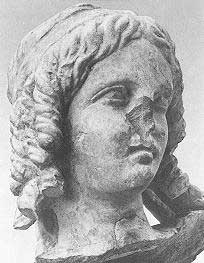
The star of my new novel, SONG OF THE NILE, is Cleopatra Selene. However, another young woman plays a very prominent role, and that is Julia, the daughter of Rome’s first emperor. Though their parents were mortal enemies, in my novel, the two teenaged girls form a strong bond of friendship.

On the surface, they don’t seem to have much in common. Where Selene is serious and careful, Julia is witty and reckless. Where Selene is thought of as a royal captive, the daughter of an Egyptian whore, Julia is known as the revered daughter of the emperor, a veritable Roman princess whose children will one day rule Rome. And yet, the two have more in common than most people know.

Selene’s mother is dead and Julia’s mother might as well be, since her father banished her mother from her life. Both girls live at the mercy of the emperor who sees them both as useful pawns in his dynastic schemes–trophies to reward the loyalty of his generals and cronies. While both girls are whip-smart and have an aptitude for politics, Augustus values only their wombs. He controls their sexuality, dictates their love lives, and tries to smother their spirits.

So how much of this is true to history? Almost all of it.

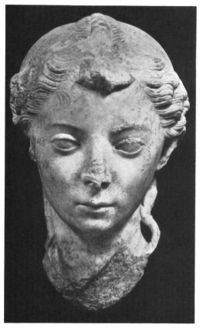
The historical Julia was taken away from her mother at birth and raised by Augustus and his wife Livia. It’s said that she lived a dreary childhood of spinning wool and weaving cloth, but once she reached her teen years, she was married off to her first cousin Marcellus, the heir apparent. Whilst Marcellus was alive, the handsome teens seemed like a romantic pairing, so when Marcellus died young of some mysterious ailment, leaving Julia a young widow, she won the people’s sympathy.

Pretty, witty, educated and fashionable, the emperor’s daughter was popular with the people.  Perhaps some of them pitied her when she was next married off to her father’s general, Agrippa, a man who was much older and had already been married twice before. Though Julia was one of the most educated women in the Roman empire, her mission was to provide sons who could be adopted by the emperor to take over after he died.

In terms of breeding, Julia seems to have taken the duty seriously and performed with grace. She gave birth to three sons and two daughters, thus ensuring that the Julio-Claudian dynasty would survive. Though she gave her body to the husband her father chose for her, it seems clear that she considered her heart to be her own to give as she pleased. It’s said that she kept a lover and when someone asked how her children all looked so much like Agrippa, she intimated that she waited to be pregnant before engaging in adultery, saying, “I never take on new passengers unless the cargo is already full.”

Julia’s story has a dramatic ending–one that I won’t reveal here lest I give spoilers that might ruin the enjoyment of my readers. Let it suffice to say, she’s one of the most interesting “bad girls” of the ancient world, and that’s probably why I love her!


Livia Drusilla: Evil Empress or Maligned Mother of the Empire?

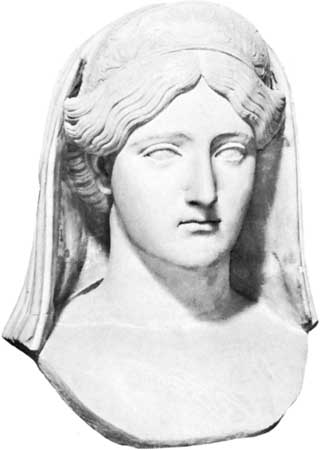
In ancient history powerful women got a bad rap. This was especially the case for Rome’s first empress, Livia Drusilla, the wife of Augustus Caesar. She comes down to us as a sort of wicked step-monster of the Julio-Claudian family–one who murders, manipulates and maligns everyone who gets in her way. The ancient writers didn’t much like her. Modern writers don’t like her either.


Played to perfection by Sian Phillips in the mini-series of Robert Graves’ famous I, Claudius, Livia emerges as a delicious villainess. She makes Cruella de Vil look rather civilized for merely wanting to turn spotted puppies into fur coats.

Personally, I find the lure of such extravagant evil too hard to resist.

When writing about my heroine, the orphaned daughter of Cleopatra, who was taken as a prisoner of war at the age of nine and marched through the streets in chains, there were plenty of villains for me to choose from. But my novels aren’t about the the tragedies this real life princess lived through; my novels are ultimately about Cleopatra Selene’s triumphs. Consequently, I needed an antagonist who could show the darker sides of my heroine’s ambitions.

Livia fit the bill.

It’s true that in my novels, Cleopatra Selene plays a dangerous and twisted game with the ruthless Emperor Augustus, who was obsessed with her mother and is now obsessed with her. But I wanted to show the other side of the coin–a woman who was nothing whatsoever like Cleopatra of Egypt, but almost as powerful.

That’s where Livia came in.

Unlike the seductive Cleopatra, Queen of the Nile, Livia was known for chaste and modest public behavior. (At least, after she married Augustus.) She always dressed in voluminous garments that practically covered her from neck to ankle, and of course, her husband would brag that she spun the wool and wove the cloth to make those baggy clothes as well. She was a veritable goddess of domesticity, our Livia. And one who supposedly eschewed expensive jewelry, claiming that her children were the only jewels she needed.

In spite of all this puritanical posturing, Livia was, nonetheless, associated with sexual scandal. According to Suetonius, she was rumored to procure young virgin girls for her husband’s bed. That made me wonder if such girls came from within the emperor’s own household and included vulnerable orphans like Cleopatra Selene.

Livia was also rumored to be a poisoner. She’s known to have concocted tonics and elixirs that she said accounted for her extraordinarily good health and long life, but if you were supping at the imperial palace, you might be better off not drinking the wine. At various points, she’s been accused of murdering Marcellus, Drusus, Germanicus, Posthumous and even Augustus himself.

In my novel, she offers Cleopatra Selene a poisoned cup.

But was Livia really such a she-devil?

Her biographer, Anthony Barrett, paints a picture of a much maligned mother of the empire. She had a documented record of altruism against which her detractors could only conjure up rumor and innuendo. She went to the emperor on behalf of the citizens of the Isle of Samos to return them to independence. She is known to have intervened on behalf of one woman accused of witchcraft; she also saved the life of a man who accidentally appeared naked before her, saying that to chaste women such men were like looking at statues. Known to advise her husband on political matters, Livia enjoyed a marriage with him of more than fifty years. Especially tricky, considering that she never gave him a child and he rather desperately needed an heir.

I can’t point to a single documented event in which Livia did an evil deed. Her worst crime, it seems, was to have lived for so long, and exerted such power over the empire as the wife or ancestress of every Julio-Claudian emperor.

For the misogynistic Romans, the only way to explain her political success was to make her a monster.

In the end, Livia was deified and worshipped as a goddess, so maybe she’ll have the last laugh. Certainly, the one regret about my own novels is that I so enjoyed exploiting her bad reputation.

Expect lots of wickedness and depravity in Song of the Nile, but in the third and final book of the trilogy, I hope to redeem myself by giving Livia a little bit of empathy. So, what about you? Are there women in history that you love to hate?

Who Were Cleopatra’s Grandchildren?

I’ve spent the past few years writing about Cleopatra’s daughter–a fascinating young woman that most people don’t even know existed. Today I want to talk about the next generation, the children that the infamous Queen of the Nile may have bounced on her knee if she’d lived to a ripe old grandmotherly age.

As far as we know, Cleopatra Selene was the only survivor of the Ptolemaic dynasty. But she seems to have been determined not to be the last of her line.

Though Selene’s parents were two of the most famously fertile individuals in ancient history, it is only certain that Selene had one son. He was born to her late in life and may have hastened her death. The name she chose for him is both the single most telling detail about her life and the most mysterious. Breaking with ancient tradition, her son wasn’t named after her husband, King Juba II.

Instead, Selene’s son was named Ptolemy.

The importance of this cannot be overstated. It indicates that even after having been married to Selene and ruling his own country for at least a decade, Juba’s lineage was still considered to be inferior to hers. Perhaps it indicates that she was the true ruler of Mauretania. It also may have led some to question whether or not Juba II was even the father of the boy.

In a time when it would have been considered their duty to produce children, Juba and Selene appear not to have been up to the task. Perhaps Juba and Selene did not fancy sharing one another’s bed. On the other hand, child mortality rates were extremely high in the ancient world. There may well have been other children that we just don’t know about.

An inscription from ancient Athens indicated that Juba had a son and a daughter, who is unnamed. However, this daughter need not have been the child of Cleopatra Selene because King Juba actually had another wife, Princess Glaphyra of Cappadocia.

Now, historians have argued that as a Roman citizen, Juba was unlikely to have broken with Roman law and taken more than one wife at the same time. It must be pointed out, however, that like Juba, King Herod was also a Roman citizen and had more wives than he could keep track of. Juba’s father had kept many wives and it’s entirely possible that the young king may have done the same to earn the respect of his Berber peoples. It strikes me that admirers of King Juba II who insist that he couldn’t have taken a second wife because he wouldn’t have taken a second wife may be projecting onto him some virtues of modern morality. After all, even the most Roman of the Romans–Julius Caesar–is rumored to have tried to pass a law that would allow him to take more than one wife.

A more persuasive argument, to my mind, is that Archelaus the King of Cappadocia was unlikely to allow his daughter, Glaphyra, to play second-wife to Cleopatra’s daughter. Therefore, she was probably Juba’s second wife after Cleopatra Selene’s death.

So, what does that mean for Juba’s daughter? His marriage to Glaphyra was extremely short and this daughter is never mentioned in conjunction with her, so the daughter was probably Cleopatra Selene’s child. (Professor Duane Roller has suggested that Juba may have reinstated the tradition of a harem, in which case this unnamed daughter may have belonged to a concubine. But if so, it is far less likely that she would be mentioned in an inscription.)

The most probable explanation is that the girl mentioned in the inscription is Selene’s daughter. If so, the girl was likely named in the tradition of the Ptolemaic dynasty. Another Cleopatra Something or Berenice or Arsinoe. (In my own forthcoming novel, Song of the Nile, she will be named Cleopatra Isidora.)

A third child is also hinted at. Some scholars have suggested that Selene may have had two sons, both named Ptolemy, one of whom died young. This would reconcile some confusion in the historical record about Ptolemy’s age, and might also explain why Selene would have tried for another child so late in life when it was so dangerous for her to do so. If true, it would mean that Ptolemy wasn’t the only son born to Juba and Selene, but the only surviving son.

He would go on to be the King of Mauretania and he is likely the father of the girl we now believe to be Cleopatra’s great-great-granddaughter, Drusilla of Mauritania!

Snake Charming, Serpent Symbolism & Slithery Politics in the Ancient World


The heroine of my novels, Cleopatra Selene, is the daughter of the much more famous Cleopatra VII of Egypt, the notorious Queen of the Nile who is best known for having committed suicide by way of clutching a venomous serpent to her breast. There is some debate over whether or not the story is true, but the legendary iconography remains.


The idea that Cleopatra was a seductress, a wicked woman who lured good Roman soldiers to their deaths, fits in with the Judeo-Christian idea of both women and serpents. The bible presents the snake to us as an object of wicked temptation, luring us to offend the divine order of the universe. But this Judaic view of the serpent is only one of the perspectives in the ancient world.

To the Egyptians, the cobra was a sacred animal that represented the ancient cobra-goddess Meretseger, who guarded the tombs of pharaohs. Another cobra-goddess was Wadjet, who was a guardian and protectress. The symbol of the cobra was so closely associated with the idea of royalty and the right to rule that it would become part of the official crown in the form of the uraeus, an icon of royalty that Cleopatra adopted herself. In fact, she chose three–one serpent to represent herself, her son Ptolemy Caesarion and the Roman man she claimed was her husband, Julius Caesar.

If Cleopatra did choose to die by the bite of a cobra, it would have been a highly symbolic political act–one that declared her the rightful ruler of Egypt, at one with the old gods of Egypt, and immortal.  (The shedding of skin helped to perpetuate the image of the snake as an immortal animal.)

Despite her mother’s association with snakes–or perhaps because of it–Cleopatra’s daughter seems to have eschewed their symbolism in favor of crocodiles. However, she was likely to have encountered snakes in the Kingdom of Mauretania, where she was sent to rule. Snake charming was a popular entertainment in the ancient world and ancient magicians were said to be able to turn staves into snakes.

Snake charming, then as now, was accomplished by way of training a serpent, then pretending as if the music has hypnotized the dangerous animal. In reality, most of these performing snakes had their mouths sewn loosely shut or their fangs removed. However, the reputation of the charmers was often strong enough that they were called upon to rid villages of dangerous snakes.

But even if the Hellenized Queen Cleopatra Selene hadn’t been impressed by the reverence of Egypt for the snake, or by the snake charmers of North Africa, she would still have had to contend with the Greek idea of serpents.

In Greek mythology, the serpentine caduceus is a staff held by Hermes, who was a messenger god, a guardian of commerce, a protector and a guide to the dead. This symbol of the caduceus is often mistaken as a symbol of healing because it is confused with the single serpent and rod of Asclepius, the Greek God of medicine and healing. The shedding of snake skin represented for the Greeks a rejuvenation of the body or spirit. The serpent itself is also a representation of the dual nature of a physician who deals with both life and death. Because of this, the serpent was a highly respected animal in ancient Greece and figured prominently in mystery cults. Even the mother of Alexander the Great was said to keep serpents as pets and was rumored to have been seduced by Zeus in the form of a snake.

With the image of the serpent so prevalent throughout culture and mythology, it’s no surprise Cleopatra Selene was depicted wearing a snake armband on the cover of Song of the Nile!


The Emotional Drama Behind Ancient Rome’s Theatre of Marcellus

Reproduction of the Theatre of Marcellus on the Banks of the Tiber River (courtesy of VRoma)

Ancient Rome was going to get a new theatre; this was never in any doubt. Julius Caesar acquired and cleared the land on the shore of the Tiber River. However, his grand designs for the place were frustrated by his untimely assassination. Still, what are a few fatal dagger holes to the plans of an immortal? He was proclaimed, in death, to have ascended to the heavens as a god, and Augustus, his heir, continued on with the plan to build a theatre.

At some point, the project appears to have been delegated to the emperor’s young nephew, Marcellus. Now, the handsome young Marcellus wasn’t just the nephew of the emperor; he was also married to the emperor’s daughter, Julia. This made him the heir apparent. And if you wanted to be seen as an up and coming politician in ancient Rome, it behooved you to build a public building or two. Where Marcellus was supposed to have come up with the fortune to build the theatre is uncertain, but his mother, ambitious on his behalf, may have loaned him the coin.

Unfortunately for Rome, Marcellus had the bad grace to die unexpectedly of a fever or by drowning or some combination of the two. All of Rome agreed that it was tragically sad and Augustus was obliged to promise that he would complete the theatre as a memorial to his dead nephew and son-in-law. By transforming it from a simple donation of a wealthy patrician into a tribute to a dead member of the imperial family, the emperor may have imbued the building with much sentimentality.

Sketch of the Theatre from the Side

After all, a number of women in Rome mourned the death of Marcellus. Certainly, his mother Octavia would grieve for him the rest of her life; she died not long after the theatre was finally dedicated in her son’s name. The widow Julia may have had some special attachment to the theatre as well, especially considering her reputation as a patroness of the arts. Then there are the sisters of Marcellus–the Marcelli, the Antonias, and perhaps even a step-sister by the name of Cleopatra Selene.

The theatre was a massive undertaking, beautified by elaborate columns and white travertine. Designed to accommodate more than 11,000 people, it kept workers busy for years. Unfortunately, they didn’t work fast enough. By the time Augustus returned to Rome in 17 BC to celebrate the Secular Games and declare the beginning of a Golden Age, the theatre wasn’t finished. This had to be enormously frustrating for the imperial family as they were attempting to set themselves apart as a sacrosanct royal unit. In any case, the fact that the theatre wasn’t ready to be dedicated in the name of their beloved Marcellus did not deter the emperor.

Interior view. Which seats would you want?

Several performances and events were held in the unfinished theatre as part of the celebration as I will detail in my third and final novel in my series about Cleopatra’s daughter.

As someone who writes in ancient history, I sometimes feel myself disadvantaged. I envy those English history authors who can actually walk through in-tact castles. For me, this kind of reconstruction is the next best thing. I love being able to visualize the places my heroine may have walked. The places she’d have spent her time in Rome. The places all the little dramas of her life may have unfolded.

Now, the stage is set…and I’d better write the scene.