Join the Newsletter!
Latest Book
Categories
Community
Connect

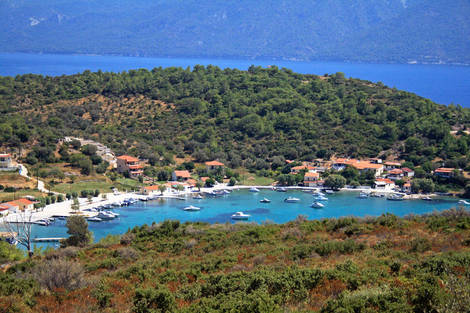
When the Isle of Samos was the Center of the World

If it’s good to be the king, it’s even better to be the emperor. At least in ancient Rome. Unless your guards are waiting for you with daggers, or an angry wife feeds you poisoned mushrooms, you get to be the center of the world…wherever you go.

Now, when we think of the Roman empire–particularly the early Roman empire when there was still a pretense of a Republic–we quite naturally think of Rome as the center of the civilized world. Certainly, Rome’s first emperor, Augustus, would have wanted us to think of it that way.

However, the fact remains that once he’d wrested control away from the Senate and other quasi-democratic institutions, the government was always wherever he went. And in the aftermath of his victory over Cleopatra VII and Marcus Antonius (aka Mark Antony), the emperor spent quite some time on the Isle of Samos in Greece.

What was so special about this island? Well, for one, it had to be salt in the wound for those who had supported Cleopatra and Antony–because the Isle of Samos is where those two famous lovers made their doomed preparations for war. But it also had a lovely climate, and in spite of his stern Roman values, the emperor liked his creature comforts. (When fighting in the mountains in Spain, for example, he let his soldiers endure the cold while he vacationed down in Tarragona.)

Between the years of 22 BC – 19 BC, however, Augustus had another reason to move his court to the Greek island. Namely, he was preparing for war with Parthia to the East. He needed a relatively secure staging area from which to reorganize the Eastern part of the empire so as to make a stable foothold from which to advance. He had kings to appoint, taxes to levy, people to punish, and territorial boundaries to redraw.

In my new novel, Song of the Nile, my heroine believes that this is the perfect time to convince Augustus to restore her to the throne of Egypt. Like Cleopatra before her, she hopes to convince the Romans that she can provide them with grain in their long-sought war with the Parthians. It’s her experiences there, in Greece, engaged in a high stakes cat and mouse game with the emperor that change her forever.

So how much of that is true? Historically speaking, we have no idea where Cleopatra Selene was during those years before 19BC when she finally appears on the coins of Mauretania, but there are only three options. She may have been in Mauretania with Juba, though some scholars do question this idea and think she married Juba later. She may have been in Rome under the care of the emperor’s sister, Octavia. Or, as a ward of the emperor’s and a member of his court, she may have been on the Isle of Samos.

I chose the latter because it made for a wonderful showdown in my book–a titanic clash between a ruthless, complex, depraved emperor and the girl upon whose shoulders rested the legacy of Cleopatra. I think it made for a wonderful choice, and I hope my readers will agree!

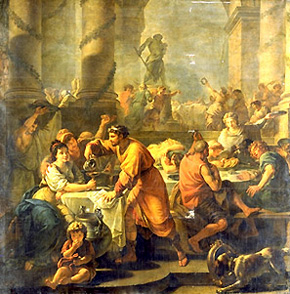
Io Saturnalia! A Holiday Party Tray, Ancient Roman Style #foodiefriday

Guest Post by Heather Domin

December used to be a month – now it’s a whole year. ~Seneca

I think many of us can relate to this ancient observation by Seneca. From its origin as a single holy day in December, the Roman festival of Saturnalia snowballed into a month-devouring extravaganza of parties, presents, shopping, eating, and funny hats.

Officially, Saturnalia was the festival of Saturn, the father of Jupiter and his siblings; he was a god of peace and plenty, and the Romans worshiped him at the winter solstice with a day of rest and feasting. Being Romans, that day became a few days, then a week, then almost a whole month of partying, gift-giving, and relaxation of the strict Roman social order into something kinda-sorta almost resembling equality. (But not really.) Augustus and later emperors tried to trim the celebrations back to a few days, but it never worked; the season eventually became so overblown that conservatives complained about too much secularization, too much focus on material goods, and that a holy day had become an excuse to quit work and get drunk. (Sound familiar?)

The Romans celebrated Saturnalia in ways that would look very familiar to our modern eyes: decorating homes and shops with winter flora; exchanging gifts with friends and family; giving bonuses to employees and servants; even wearing gaudy holiday clothes. And of course, food – lots and lots of food. Saturn was an agricultural deity, and Saturnalia was the time to show him how thankful you were for his bounty by stuffing your face with as much of it as you could. Because Saturn was associated with grain, baked goods were a staple feature of his festival, but other than that any kind of festive potluck with friends and family would do. If you’d like to give your midwinter holiday get-together an authentic Saturnalia feel this year, here are a few suggestions to get you started.

  1. Start the Buffet

Focus on finger food: sausage rolls, deviled eggs, cheese, olives, nuts, seeds, and dried fruits would all be period-correct. The Romans considered raw vegetables unhealthy, so skip the crudités and serve your veggies in the form of pickles, chutneys, or relishes. Hummus would be fine, and those little miniature quiches are surprisingly authentic. Be sure to include lots of bread: rolls, rounds, and especially flatbread.

  1. Roast Boar, Anyone?

Pork is the easiest and most authentic choice for Roman meat dishes (if you’re fresh out of wild boar, sausages and bacon are both perfectly fine). If you don’t eat pork, go for poultry, lamb, or game; seafood would be OK if you can get it fresh, but most Romans rarely ate beef. If you’re not a carnivore, try legume or winter vegetable dishes that are thick enough to be scooped up with flatbread.

  1. Sweets for Saturn

Dessert is where Saturnalia really shines – baked goods and sweet treats are what make this holiday special. Candied fruit, jams, and tarts would all be appropriate, as would sweetened nuts and seeds — but the real star of the show should be cookies and cakes. Gingersnaps, pfeffernüße, paprenjak, nut rolls, honey buns – your favorite holiday cookie is most likely quite appropriate for Saturnalia. (Just remember the Romans didn’t have chocolate. But who am I to stop you?) These cakes were often part of the religious offerings, so if you’re going to splurge, splurge on the cookie tray. Here are two Roman recipes you might want to try; both were considered worthy to be given as offerings, and they’re also quite tasty.

~ mustacei (spice cookies) ~

4 cups (500g) flour
1 1/2 cups (300ml) grape juice or sweet wine
2 Tbsp anise seeds
2 Tbsp cumin seeds
1/2 cup (100g) lard, cubed
1/3 cup (50g) cheese, grated
about 20 bay leaves

Grind the anise and cumin. Mix the flour with the juice, then stir in the anise, cumin, lard, and cheese. (I’d recommend a little salt if your cheese is bland.) Shape into small balls and flatten by pressing a bay leaf into each. Arrange the cookies on a tray, bay leaf down, and bake at 350F (180C) for half an hour. Makes about 20 cookies. Yes, you can substitute shortening for the lard; and if you want to increase the spice content, try poppy seed, cinnamon, ginger, or black pepper.

~ globi (cheese balls) ~

This is my absolute favorite Roman recipe, and I’ve tried quite a few. Tiny deep-fried cheesecakes – a treat truly worthy of the gods! Combine equal parts flour and soft cheese. I use spelt flour, and I like to toast it for a little more flavor; for the cheese I recommend a good quality ricotta – cow, goat, or sheep, it’s all good. (Again, if your cheese is bland, you’ll want to add a pinch of salt and/or sugar.) Let the dough rest while you heat up a big pot of lard (OK fine, vegetable oil). Form the dough into small balls and deep-fry them, turning with chopsticks, until golden brown. Drain on paper towels. Drizzle honey over the globi and, if you’re feeling frisky, sprinkle them with poppy seeds. Bask in the deliciousness.

Now make yourself a nice big batch of spiced wine, and you’re ready to set your Saturnalia table. Carpe cibum!

Recipe modernizations are from A Taste of Ancient Rome by Ilaria Gozzini Giacosa based on texts from Apicius and Cato. If you’re into primary sources (and who isn’t?), I recommend Martial’s Epigram 14, Seneca’s Epistle 18, Horace’s Satire II,  Macrobius’ Saturnalia, and Cato’s De Agri Cultura.


Heather Domin is the author of the 2009 novel The Soldier of Raetia, putting her History degree to excellent use by writing fiction filled with gratuitous sex and graphic violence. A lifelong writer and nerd, she embraces the ability to publish her writing on the internet while remaining an anti-social recluse. She reviews fiction and nonfiction for the Historical Novel Society and can often be found skulking around on Goodreads; she also keeps a blog at Livejournal and has a Twitter where she doesn’t say anything interesting but at least she doesn’t spam you.

http://heatherdomin.comhttp://teacake421.livejournal.com

The Mystery of Monuments…

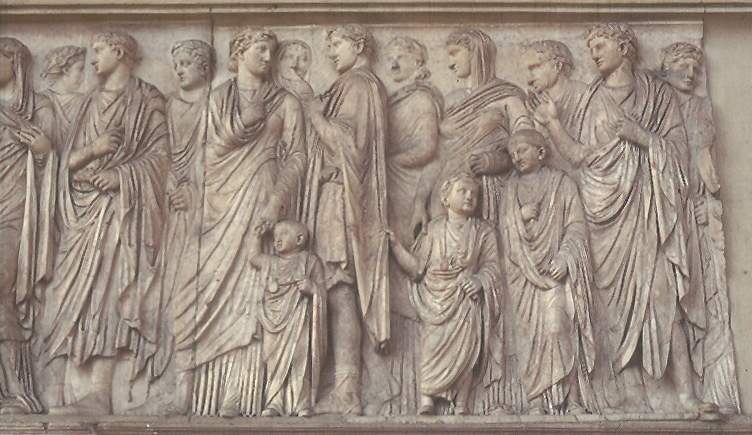
Augustus Caesar’s most lasting monument is the Ara Pacis, a monument to peace. It’s a splendid work of propaganda, and one could spend a lifetime unraveling all its hidden symbols and meanings. After having defeated Cleopatra and Mark Antony, Augustus wanted to usher in a Golden Age. He wanted to be remembered for restoring peace. What fascinates me, of course, is that one of the mysterious children depicted on the monument has been tentatively identified as Ptolemy of Mauretania–the grandson of Cleopatra VII, son of Cleopatra Selene and Juba II.

If the Hellenistic figure is actually Selene’s son, an argument can be made that the Mauretanian royal family was far more important to Augustus than historians have led us to believe. It is possible that Ptolemy’s inclusion on the monument is as a royal hostage–Augustus wasn’t shy in pointing out that he held the children of Gaul and Parthia as his ‘guests’. This figure may count as evidence that Selene’s children were raised in Rome, just as she had been, as wards of the emperor.

On the other hand, Mauretania wasn’t a conquered nation and Selene was a nominal member of the imperial family. She was the half-sister of the Antonias and a favorite of the emperor’s sister, Octavia. She’d been raised in their household. Perhaps it’s not so strange that her child should be portrayed on what is, in the end, a family monument.

Either way, Ptolemy’s inclusion on the Ara Pacis casts the importance of Mauretania, which has previously been considered a sort of minor league western frontier, in a new light. Certainly, Virgil’s insistence that Rome would expand beyond the Garamantes (a Numidian and Mauretanian tribal group) gives us a hint as to Augustus’ ambitions. Perhaps it was no accident that he put Selene and Juba II at the western border of the empire where he would need strong allies for a new campaign.

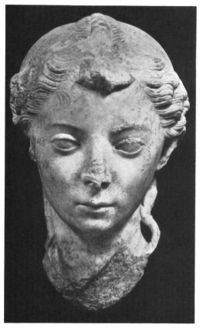
But back to the monument. What captured my attention is the swan in the so-called Tellus Panel, which cannot help but call to mind the mythology of Apollo and Cyrene, whose son became the patron god of cattle, fruit trees, hunting, husbandry. (Selene, of course, was the nominal successor to Cyrene as the queen of Cyrenaica in title if not in fact.) Then, of course, there is the similarity between the portrait of the goddess (identified variously as Tellus, Ceres, Pax and Venus) with her straight over-masculine nose, and the surviving portraits of Cleopatra Selene. But those are the kinds of eye-of-the-beholder things that an author of fiction is bound to make hay with.

If you want a little tour of the Ara Pacis monument, check out this video:

Lucius Cornelius Balbus and his 15 Minutes of Fame

Cross-posted from: Unusual Historicals

With the wicked Egyptian seductress dead, the Romans had every reason to believe the Republic would return to normal. Oh, some might argue that Cleopatra’s conqueror now meant to destroy the Republic and rule as king. He had, after all, begun to call himself Augustus (the illustrious one). But now that the civil wars were over, up-and-coming politicians like Lucius Cornelius Balbus bet that everything was going to return to normal.

Though Balbus was born in Spain, he’d been granted Roman citizenship, and had every reason to believe that he had a great future as a leader. He wasn’t a nobody after all. He was from the plebian side of gens Cornelia. Which is to say, he was related, in the complicated way of the Romans, to the Cornelii, a family who had, thus far, produced more Roman leaders than any other.

For nearly five-hundred years Rome had been ruled by her citizenry through elected bodies, governed by a carefully constructed constitution of checks and balances. Unlike our own Constitution, it didn’t guarantee equal opportunity for all–but Balbus believed it gave him a decent chance! Since Rome had done away with kings long ago, an ambitious young man could reach the pinnacle of power by working hard for the public. Young Romans started upon what was known as the cursus honorum (a course of offices) starting with military service and lowly magistracies and stretching all the way to the lofty heights of the consulship of Rome. If a young man had a taste for military life, he might become a pro-consul or governor of a province, and if he won a successful war, he would even be granted a giant military parade known as a triumph.

This military parade was one of Rome’s highest honors and a man who was granted one of these would be known as a triumphator for the rest of his life! The Senate had never allowed anyone to celebrate a triumph who hadn’t been born a Roman citizen, but Balbus thought he might have a shot, if only there were a foreign war to be found.

He’d started his military career serving under Julius Caesar. When the dictator was assassinated, Balbus appears to have gone off to find his fortune in Mauretania at the side of King Bogud. Mauretania was just across the straight from Balbus’ home town of Gades and it was a land of plenty. Good fishing, lots of natural resources, and big plantations on which Balbus could grow wheat. Not a bad place to settle down–if Balbus had been the settling kind.

Before long, Mark Antony fell in love with Cleopatra and both of them went to war with Rome. So when King Bogud sided with Mark Antony and Balbus may have been with them both at Actium. Whatever the truth of the matter, when the war was over, instead of returning to Spain, Balbus decided to make a name for himself in Africa.

Africa was, after all, Rome’s latest obsession. Once Augustus chose to marry Cleopatra’s daughter to King Juba II and make them both the rulers of Mauretania, it became clear that Africa was the hip and happening place to be. Balbus may have travelled with the court of Juba II & Cleopatra Selene. As an able soldier and veteran of the wars, he’d have been the natural choice for a Roman advisor to the new monarchs. He almost assuredly had land there and would have wanted to be on good terms with the new folks in charge. Especially since Juba and Selene were nominal members of Augustus’ extended family

Juba and Selene were indebted to Augustus and sought to honor him at every turn. They had realized what Balbus had not; the Republic was on its way out. Augustus was about to form a monarchy in fact if not name, and “the new Caesar” didn’t look kindly upon rivals. Augustus had no intention of ever allowing another Roman–especially not one born in Spain like Balbus–to have any true independent power.

But Balbus still had big plans. He accepted a post as the Pro-Consul of Africa Nova–a province just to the east of Mauretania. There he waged an aggressive war against the Garamantes, a Berber tribal people of ferocious spirit. And when he captured their settlements, collected their loot, and dealt them a decisive defeat, he appealed to the Roman Senate to grant him a triumph.

Now, as mentioned before, Augustus didn’t like rivals. The so-called First Citizen appears to have decided that he should be the only man allowed to celebrate triumphs anymore. Consequently, when Marcus Licinius Crassus (grandson of the more famous triumvir) returned from a very successful campaign in the Balkans, Augustus tried to block him from celebrating a triumph. Crassus also disappears from the historical record shortly thereafter. This is unlikely to be an accident, considering the fate that befell others outside of the Julio-Claudian family who sought military honor. (Another example is the Praefect of Egypt, Cornelius Gallus, who was forced to commit suicide for boasting of his military achievements.)

Fortunately for Balbus, when he made his request for a triumph, Augustus happened to be out of town. (The would-be-emperor was off in the East poised for war with the Parthians and perhaps a little bit out of the loop.) In what would be one of their last independent acts, the Senate granted Balbus his heart’s desire. With high hopes and ambitions, Balbus apparently went to Rome with his soldiers, rode through the streets in a chariot, his face painted crimson, a slave whispering behind him a reminder that he was still a mortal. Balbus was the first non-Roman-born general to celebrate such an honor.

He was also the last.

He showed off his prisoners and loot, was hailed as an imperator, and saw the pinnacle of his career. He was treated like a king for a day. And then he was more or less never heard from again.

As far as Augustus was concerned, the legions all belonged to him now. Roman generals were only borrowing the army from him–not from the state–and therefore, every victory was actually his victory. Henceforth, only smaller celebrations and honors and ovations were allowed to those outside the imperial family. Returning from the East with the battle-standards that had been captured by Parthia in previous wars, Augustus snuffed out the Republic’s last breath and became the first emperor of Rome.


Stephanie Dray’s debut historical fiction novel, LILY OF THE NILE , was just release by Berkley Books. The sequel is expected to release at the end of 2011. Both novels are set in the Augustan Age and feature Cleopatra’s daughter.

I Discuss Cleopatra Selene with Chick History

This isn’t your typical promo interview. This is an NPR-style in-depth discussion of the life of Cleopatra Selene and Juba. Other than my hideous mispronunciations and my niggling fear that I wasn’t quite precise enough in some of my answers, I think it went extremely well and that even people who have read the novels will learn new things in this interview. Also, there’s a slide-show that accompanies the talk. Please let me know what you think!